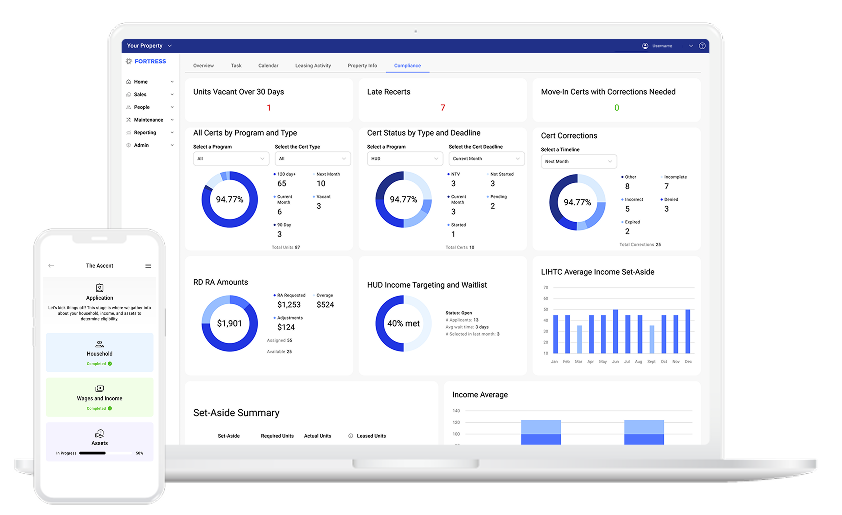
Looking for the best property management software? Learn how to evaluate platforms, compare key features and choose the right solution for a growing portfolio.
The best property management software helps operators manage more units without creating more manual work. For growing portfolios, that means bringing leasing, maintenance, accounting, reporting, resident communication, and compliance into one system. If your team still relies on spreadsheets and disconnected tools to complete everyday tasks, your software may be holding growth back.
Introduction
If you're trying to find the best property management software, you're probably not looking for another feature list.
You've likely already seen plenty of those. Every platform promises better reporting, easier leasing, stronger communication, and more automation. After a while, the comparison pages start to sound the same.
What you're really trying to determine is which software will help your team operate more efficiently as your portfolio grows. More units should not automatically mean more spreadsheets, more duplicate data entry, and more disconnected systems.
Here's the thing. The best property management software is not necessarily the biggest platform or the one with the longest feature list. It's the software that fits how your team actually works and continues to support your operation as it grows.
And if someone on your team is still updating a spreadsheet called FINAL_final_REALLYFINAL_v7.xlsx every month, there is probably room for improvement.
Key Takeaways
-
The best property management software depends on your portfolio, workflows, and growth plans.
-
Growing portfolios need centralized operations, not more disconnected systems.
-
Reporting, maintenance, leasing, accounting, and communication should work together.
-
Affordable housing operators need compliance built into daily workflows.
-
The right software reduces manual work instead of creating new workarounds.
What Is the Best Software for Property Management?
The best software for property management depends on the type of properties you manage, the complexity of your operations, and where your organization is headed over the next several years.
A company managing 100 market-rate units has very different needs than an affordable housing operator managing thousands of units across multiple states. That's why there is no single platform that works best for everyone.
Most property management systems offer some combination of:
-
Leasing
-
Rent collection
-
Maintenance management
-
Accounting
-
Reporting
-
Resident communication
-
Tenant screening
-
Document storage
The difference is how well those functions work together.
Many operators discover that their software handles individual tasks reasonably well but struggles to support complete workflows. Leasing lives in one system. Maintenance lives somewhere else. Reporting requires exports. Accounting requires additional work outside the platform.
That is not a workflow.
A property management platform should serve as the system of record for your operation, not another place where information goes to wait for a spreadsheet.
What Features Matter Most for Growing Portfolios?
Growing portfolios need software that reduces operational complexity as unit counts increase. The challenge isn't simply adding more units. It's maintaining consistency, visibility, and efficiency as more properties, employees, and processes enter the picture.
The most valuable features are often not the ones highlighted during a sales demo.
Centralized Operations
Every department should be working from the same information.
When leasing, maintenance, accounting, and reporting operate in separate systems, teams spend valuable time searching for information, reconciling data, and following up on issues that should already be visible.
A centralized system helps reduce those handoff points and keeps everyone working from a shared source of truth.
Maintenance Management
Maintenance is one of the most visible operational functions in property management, and it's often where software gaps become obvious.
Work orders should be easy to create, assign, track, and complete without requiring separate systems or manual updates. The longer teams spend managing maintenance processes, the less time they spend actually resolving resident issues.
Reporting and Visibility
Leaders need current information to make informed decisions.
Here's one opinion we'll stand behind: real-time reporting should be real-time.
If a report requires multiple exports, spreadsheet manipulation, and one employee who knows exactly which formulas to trust, that's not real-time reporting. That's delayed reporting with extra steps.
Growing organizations need visibility into operations, occupancy, maintenance performance, and financial data without waiting for manual updates.
Integration Capability
Very few property management companies operate with a single piece of software.
Screening providers, accounting systems, communication tools, and other technologies all play a role in daily operations. As portfolios grow, the ability to connect systems becomes increasingly important.
Integration flexibility should be part of every software evaluation.
How Do You Know You've Outgrown Your Current Software?
Many organizations stay with software long after it stops serving them effectively.
The warning signs are usually operational rather than technical.
You may have outgrown your current platform if:
-
Teams maintain side spreadsheets to complete daily work
-
Reporting requires manual exports
-
Data exists in multiple systems
-
Staff enter the same information more than once
-
Workflows vary significantly between properties
-
Training new employees takes longer than it should
The real problem is rarely the software itself. It's the extra work the software creates.
Every workaround carries a cost, whether that's time spent on manual processes, duplicate data entry, or correcting errors caused by disconnected systems. Those costs may seem manageable at first, but they grow alongside the portfolio.
Eventually, small inefficiencies become operational bottlenecks.
What Should Affordable Housing Operators Look For?
Affordable housing operators face challenges that many conventional property management platforms were never designed to address.
Programs such as:
-
LIHTC
-
HUD
-
RD
-
HOME
-
Project-Based Assistance
-
Layered Funding
introduce compliance responsibilities that affect everyday operations, from leasing and certifications to reporting and document management.
Affordable housing software should not treat compliance like an add-on.
Recertifications, income calculations, file reviews, document collection, and layered funding requirements are part of the job. When those workflows live outside the system, staff end up managing compliance through email chains, spreadsheets, and shared drives.
Operators evaluating software should look for:
-
Compliance-focused workflows
-
Centralized document management
-
Affordable housing reporting
-
Waitlist management
-
Online application processes
-
HOTMA compliance support
For many organizations, modernizing the application process is one of the fastest ways to improve efficiency. Online applications reduce paperwork, standardize data collection, and help applicants move through the process more quickly.
What Is the Best Property Management Software for Small Companies?
The best property management software for small companies is the platform that supports future growth, not just current needs.
Cost matters, but software decisions should also account for where the business plans to be in three to five years.
Many smaller operators choose software based primarily on monthly pricing, only to discover that growth creates new challenges. As properties are added, reporting requirements increase, maintenance volume grows, and more employees need access to the system.
What looked affordable at 200 units can become expensive when staff spend hours working around software limitations. The cheapest software is rarely the cheapest outcome.
Staff time spent fixing data issues, creating reports manually, and maintaining workarounds is a real cost that often doesn't appear on a pricing sheet.
Before selecting a platform, ask:
-
Can it support a larger portfolio?
-
Can workflows be standardized?
-
Can reporting scale with growth?
-
Can it integrate with future systems?
-
Will it support changing operational needs?
Those answers often matter more than a small difference in subscription pricing.
Should You Switch Property Management Software Right Now?
Maybe. Not every organization needs new software, and that's worth saying.
If your current platform supports your workflows, provides reliable reporting, and your team isn't creating workarounds to complete everyday tasks, you may not need to switch.
There are also situations where waiting makes sense.
Don't migrate yet if:
-
Your data is inconsistent
-
Your processes are undocumented
-
Leadership has not aligned on goals
-
Teams disagree on workflows
Don't migrate dirty data and call it progress. It just becomes messy in a nicer font.
Before evaluating vendors, document your current processes and identify where work actually breaks down.
How Should You Evaluate Property Management Software Vendors?
Most buyers focus heavily on feature lists, but a better approach is to evaluate workflows.
Ask vendors to show:
-
A complete move-in process
-
A maintenance request lifecycle
-
Reporting workflows
-
Resident communication tools
-
Accounting processes
-
Compliance workflows
Shop the boring screens, not the pretty dashboard.
The day-to-day workflows determine whether software helps your team operate more effectively or simply gives them another system to manage.
Support also matters. Technology is only part of the equation. At Fortress OS, every partner receives a dedicated customer success representative.
Frequently Asked Questions
What is the best property management software?
The best property management software depends on portfolio size, operational complexity, and property type. Growing portfolios typically benefit from platforms that centralize leasing, maintenance, accounting, reporting, and communication in a single system.
What is the best software for property management companies?
Property management companies should prioritize workflow efficiency, reporting visibility, maintenance management, and integration capabilities. The right platform helps teams manage more properties without creating additional administrative work.
What is the best property management software for small companies?
Small companies should focus on software that can support future growth. A lower monthly price may not provide the best long-term value if the platform creates manual work or requires frequent workarounds.
What features should property management software include?
Most operators need leasing, maintenance, accounting, reporting, resident communication, document management, screening, and mobile access. Growing portfolios should also prioritize workflow standardization and integration capabilities.
When should I replace my property management software?
Consider evaluating alternatives when reporting requires manual exports, teams rely on spreadsheets, duplicate data entry becomes common, or staff create workarounds to complete routine tasks.
And if you're still finding critical reports in a folder called FINAL_v12_USE_THIS_ONE, it might be time for a different approach.