
 Sign in to Fortress OS
Part of Affordable Housing Compliance Guide: LIHTC, HUD, USDA and HOTMA
Affordable Housing Is a Mission, Not a Module
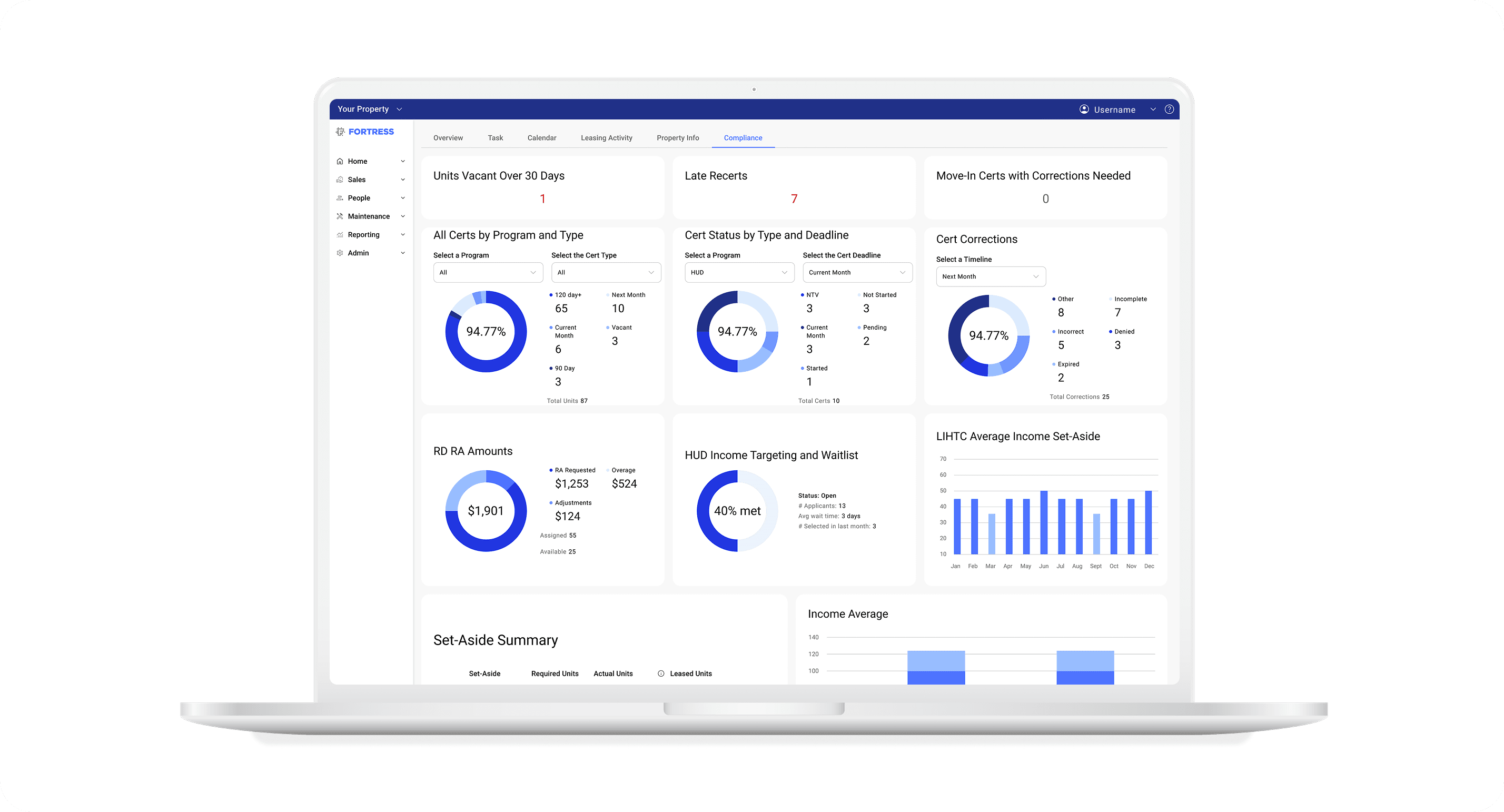
Affordable housing is a mission, not a module. When software bolts it on, a resident transfer gets logged as a move-out and a move-in. Compliance audits do not recognize that. Built-in design keeps resident data, certifications, and balances connected, so teams stop fighting their own system.
Key takeaways
Bolt-on affordable software logs a resident transfer as a move-out and a move-in, which breaks compliance records.
When resident names live in two places, certifications, deposits, and histories stop lining up.
Disconnected resident and subsidy ledgers turn reconciliation into a constant, risky game of comparing reports.
Built-in design keeps resident data in one place and makes transfers behave like actual transfers.
Software built for the mission gives operators clean data, audit accuracy, and confidence in their reports.
Every time I say this, people think they misheard me.
Affordable housing isn’t a module, it’s a mission. And treating it like an add-on creates chaos.
In many conventional systems, a simple resident transfer is recorded as a move-out and a move-in. That distinction might work for market-rate housing, but in affordable housing it creates immediate problems. Certification records, state reporting systems, and compliance audits do not look for a move-out and a move-in. They look for a transfer.
That mismatch alone can unravel data integrity and compliance accuracy.
When Systems Are Not Designed for Affordable
The problems do not stop there. In some systems, resident names live in two places, one in the core database and another in the affordable layer. They do not even have to match. That disconnect makes it harder to tie certifications to deposits, track histories accurately, and trust reports.
The same is true for resident and subsidy ledger balances. When data lives in multiple systems that were never meant to work together, reconciliation becomes a constant struggle. Teams spend hours comparing reports, tracking discrepancies, and fixing issues that should never exist in the first place.
This isn’t just inefficient, it’s risky.
Built In, Not Bolted On
At Fortress OS, affordable housing isn’t bolted on, it’s built in.
That means transfers behave like transfers. Resident data lives in one place. Certifications, deposits, and balances are connected by design. Compliance workflows follow real operational logic instead of forcing teams to work around the software.
When you design for affordable housing from the beginning, the system finally makes sense.
A Better Way Forward
Affordable housing deserves systems built for its reality, not adapted from something else. When software is designed with the mission in mind, operators gain clarity, accuracy, and confidence in their data and their decisions.
At Fortress OS, our goal is simple. Make affordable housing easier to operate so teams can focus on serving residents and communities.
It is time to stop forcing affordable housing into a conventional box and start using systems designed for the mission.
· Founder & CEO
Scaled a Nashville affordable housing operation, couldn't find a system built for it, so she built one.
Frequently asked questions
Quick answers to what people ask about this topic. Still curious? Talk to our team.
Contact UsWhy is affordable housing software different from market-rate property management software?
Affordable housing software has to treat compliance as the core job, not an add-on. Market-rate systems log a resident transfer as a separate move-out and move-in. In affordable housing, certification records, state reporting, and audits look for a transfer, not two events. That mismatch alone can break data integrity and compliance accuracy.
What goes wrong when affordable housing is a bolted-on module?
Bolt-on modules create disconnects that cause real problems. Resident names can live in two places that do not have to match. Resident and subsidy ledger balances sit in systems that were never built to work together. Teams then spend hours comparing reports and fixing discrepancies that should never exist in the first place.
How should a resident transfer be handled in affordable housing software?
A transfer should behave like a transfer. That means one continuous event tied to the resident's certification history. Conventional systems split it into a move-out and a move-in, which compliance audits and state reporting do not recognize. Software built for affordable housing keeps the transfer intact so records stay accurate.
Why does disconnected resident data cause compliance risk?
When resident data lives in multiple systems that were never meant to talk, you cannot trust your reports. Names may not match between the core database and the affordable layer. Certifications, deposits, and balances get hard to tie together. Reconciliation becomes constant, and small gaps turn into audit and compliance risk.
What does built-in affordable housing software mean at Fortress OS?
At Fortress OS, affordable housing is built in, not bolted on. Transfers behave like transfers. Resident data lives in one place. Certifications, deposits, and balances are connected by design. Compliance workflows follow real operational logic, so teams stop building workarounds just to make the software cooperate.
How does built-in affordable housing software reduce reconciliation work?
When resident and subsidy ledgers live in one connected system, balances tie back to the same resident record by design. Teams no longer compare reports across tools or chase discrepancies between separate databases. That cuts the hours spent fixing issues that disconnected, bolted-on systems create in the first place.
Related resources
Affordable-First Operating System
See how Fortress OS builds affordable housing into the core, not a bolt-on module.
Compliance-Ready Applications
Tie certifications, income limits, and resident data together from the first application.
Connected Resident Accounting
Keep resident and subsidy ledgers in one place so reconciliation stops being a struggle.
Related resources
Affordable Housing Compliance Guide: LIHTC, HUD, USDA and HOTMA
Affordable housing compliance explained: LIHTC, HUD, Section 8, USDA RD and HOTMA dates, what a file review checks, and...
Fortress Compliance
Where eligibility and certification work actually happens.
What's Hot With HOTMA: Key Points for 2027
HOTMA hits HUD Multifamily and most PHAs Jan 1, 2027. See the 2027 asset limit, deductions, new interim rules, and...
The Future of Affordable Housing Depends on Innovation
The affordable housing crisis is not just about funding. Fortress OS and modern innovation are removing the operational...
Affordable Housing Is About More Than Roofs, It’s About Preservation
Affordable housing means more than new units. It means protecting homes families rely on, and keeping them affordable...
Affordable housing property management software
Compliance, leasing, files, and reporting in one system.
